
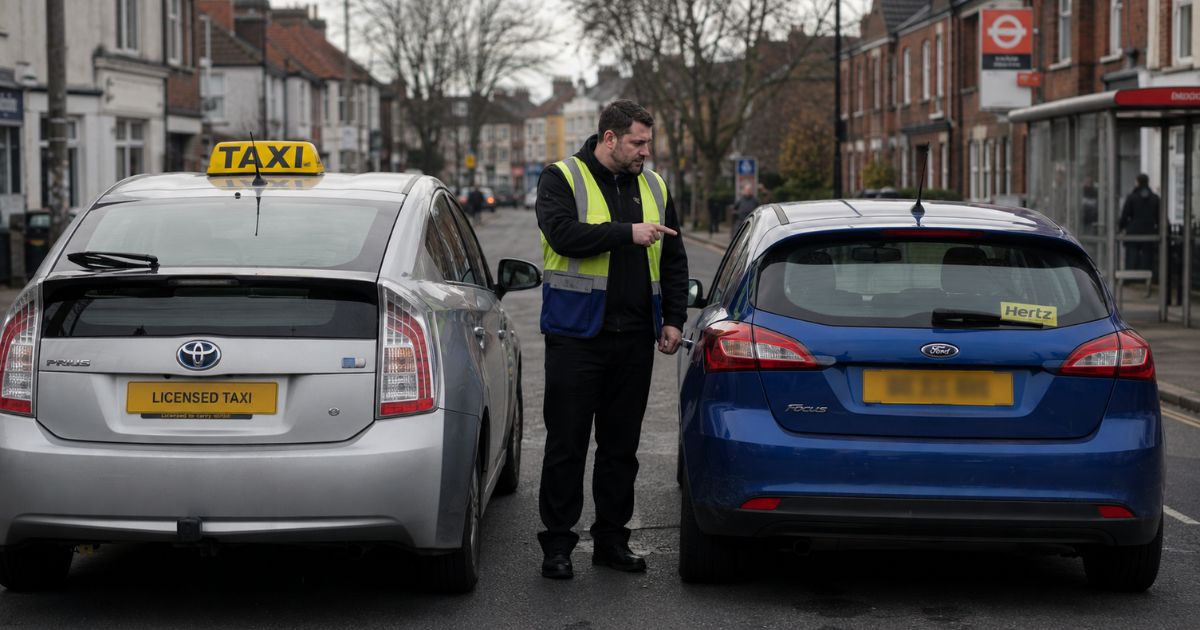
Taxi Replacement vs Hire Cars: What
Taxi replacement vs hire cars: which one keeps you earning? For a licensed taxi or private hire driver, that choice can mean the difference between working tomorrow or sitting at home. When your vehicle leaves the road after an accident, every day without a car costs you fares, tips, and regular customers.
Many drivers assume a standard rental car will do the job. It will not. Using a standard hire car for passenger transport is illegal. Your insurance will not cover you. Your licence could be suspended.
That is why thousands of UK drivers now use a specialist taxi replacement service. Before you book anything, compare taxi replacement providers near you to see which offers the fastest response and full legal compliance. The wrong choice hits your wallet twice: once for the rental, again for lost income.
This guide cuts through the confusion. You will learn exactly what each option offers, how the insurance works, and which one keeps your business moving.
What Is a Taxi Replacement Car?
A taxi replacement car is a temporary vehicle built for one purpose: to let you work while your own taxi is being repaired.
It arrives fully compliant. That means:
- Hire and reward insurance included
- Valid taxi or private hire plates (where your council requires them)
- Working meter or booking system compatibility
- Correct vehicle class (saloon, MPV, wheelchair accessible, etc.)
You do not set this up yourself. A specialist accident management company or your insurer arranges it. In most cases, you pay nothing upfront. The at-fault driver’s insurer covers the cost.
Most drivers receive their replacement within 24 hours of claim approval. You drop off your damaged car. You pick up the replacement. Then you go back to work.
What Is a Standard Hire Car?
A standard hire car comes from companies like Enterprise, Europcar, or Hertz. You rent it by the day or week. It is fine for personal trips, shopping, or visiting family.
But it is not licensed for taxi or private hire work.
Here is why that matters:
- No hire and reward insurance – your passengers are not covered
- No taxi plate – your local council has not approved it
- Passenger transport violates the rental agreement
- You face fines, penalty points, or licence removal if caught
Even if the rental car looks like a taxi (a black saloon, for example), it is not legal. A quick check by police or council enforcement officers will spot the missing plate and insurance.
Using a standard hire car for taxi work is not a grey area. It is a clear offence.
Taxi Replacement vs Hire Car: The Real Differences
Let me lay this out simply. Here is what each option gives you.
| Feature | Taxi Replacement | Standard Hire Car |
| Legal for passenger work | Yes | No |
| Hire and reward insurance | Included | Not included |
| Licensed by council | Yes (compliant) | No |
| Keeps you earning | Yes | No |
| Upfront cost to you | Usually none | Full payment upfront |
| Legal risk | None | High (fines, licence suspension) |
For a working driver, the choice is obvious. A standard hire car leaves you mobile but unemployed.
Why a Taxi Replacement Car Protects Your Income
Driving is not a hobby. It is your business. Every day off the road hits your bank account directly.
Here is how a taxi replacement car helps you avoid that loss.
1. You keep working from day one
No gap in earnings. No explaining to regular customers why you are unavailable. No lost airport runs or school contracts.
2. You pay nothing out of pocket (in most cases)
If the accident was not your fault, the replacement cost goes directly to the other driver’s insurer. You do not write a cheque. You do not claim back later.
3. You stay fully legal
The replacement meets your council’s licensing rules. That includes age limits, emissions standards, and plate display. No risk of a fine or a day in court.
4. You get a like-for-like vehicle
A five-seat saloon driver receives a five-seat saloon. An eight-seat MPV driver receives a similar MPV. You do not lose work because your replacement is too small or unsuitable.
5. You get end-to-end support
Good providers handle everything:
- Your accident claim
- Your vehicle repairs
- All communication with insurers
You focus on driving. They focus on paperwork.
When Does a Standard Hire Car Make Sense?
Very rarely for a working driver. But here are the only scenarios where a standard hire car could be acceptable.
- You have decided to take time off while your taxi is repaired
- You only need personal transport (shopping, appointments, visiting family)
- Your own taxi insurance policy does not include any replacement vehicle
Even then, never use a standard hire car for paid passenger work. Not even one trip. Not even for a friend who offers cash.
The risk is simple: if you have an accident while carrying a passenger for payment, you have no insurance. That means you personally pay for every injury, every repair, every legal fee. Those bills can reach six figures.
The Hidden Trap: Credit Hire Agreements
Many taxi replacement services sound too good to be true. Sometimes they are.
Some providers use what is called a credit hire agreement. They give you a replacement taxi. You sign a contract. You pay nothing upfront.
But here is the catch.
If the at-fault insurer disputes liability – or simply delays paying – you become personally responsible for the daily hire cost. That can be £150 to £300 per day. For a two-month dispute, you could owe £10,000 or more.
Always ask this question before you sign anything: “Is this a credit hire agreement, and what is my personal liability if the other insurer refuses to pay?”
If the provider avoids answering, walk away. Find another service.
A good taxi replacement provider will explain the terms clearly. They will not hide behind small print.
What If the Accident Was Your Fault?
Most of this guide assumes you are not at fault. But what if you caused the crash?
Then the rules change completely.
Accident management companies will not help you. They only work for non-fault drivers.
Your only option is your own taxi insurance policy. Check your policy wording.
Look for terms like:
- Courtesy taxi
- Vehicle replacement cover
- Hire car inclusion
Comprehensive taxi policies often include a replacement.
But there are limits:
- A daily cap (e.g., £50 per day)
- A time limit (e.g., 14 days maximum)
- An approved repairer condition (you must use their garage)
Third-party only policies include nothing. You are on your own.
Your move: Call your insurer immediately after an at-fault accident. Ask exactly what replacement you qualify for. Get it in writing.
Before You Accept Any Replacement | Check These 5 Things
Do not just say yes to the first vehicle offered. Ask these questions first.
- Is this a credit hire or a policy-funded replacement? (Credit hire carries personal liability risk.)
- What is the vehicle’s age and emissions? (Your council may refuse vehicles over a certain age.)
- Does it come with the correct plate and signage? (Some councils require temporary plates. Ask who arranges them.)
- What is the insurance excess? (Often £500–£1,500. Can you reduce it with a damage waiver?)
- How long can I keep it? (Until repairs finish? Until settlement? Is there a fixed maximum?)
Get the answers in writing. A quick email saves a huge headache later.
Your 4-Step Action Plan After an Accident
Follow these steps. They take one hour. They could save you thousands.
Step 1 – Report the accident properly
Exchange details with the other driver. Take photos. Note the time, date, and weather. Report to your insurer within 24 hours – even if you are not at fault.
Step 2 – Check your policy and fault status
If you are not at fault, you can use a taxi replacement service. If you are at fault, claim through your own policy’s courtesy vehicle (if you have one).
Step 3 – Ask the credit hire question
Before accepting any replacement, ask: “Is this credit hire? If yes, what is my personal liability?”
Step 4 – Inspect the replacement before you drive away
Check the plate, the signage, the meter or screen, the insurance documents. Take timestamped photos of the whole car. Fill the tank. Note the return deadline.
Final Thoughts
You became a taxi driver to earn a living. A broken car should not stop that.
A standard hire car is a trap for the uninformed. It looks like a solution. It feels like a car. But it does not let you work. And using it for passenger trips puts your licence and your finances at serious risk.
A taxi replacement car is built for drivers like you. It keeps you legal. It keeps you earning. And when arranged correctly, it costs you nothing upfront.
Do not let an accident turn into a lost month of income. Search for approved taxi replacement services in your area before you need them. Save their number in your phone. That way, when the worst happens, you already know who to call.
Your business is too valuable to leave to chance. Choose the replacement that lets you drive, not the one that leaves you parked.